

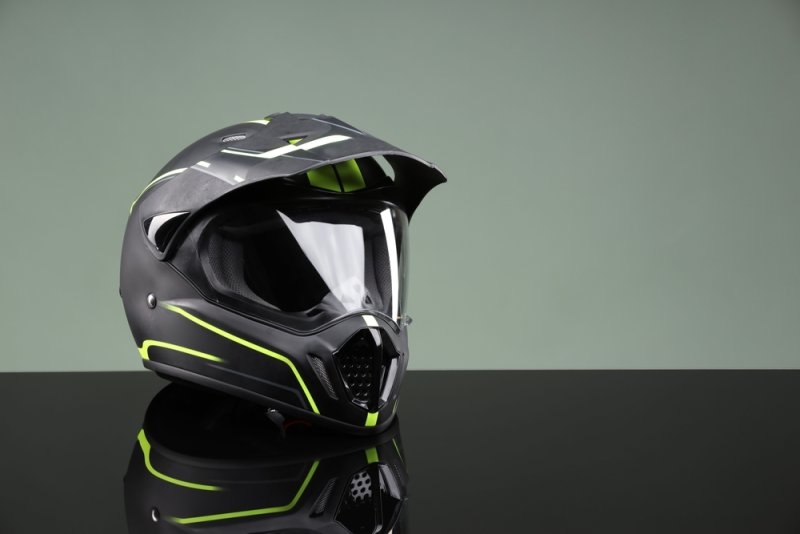
A good motorcycle helmet has to find the right balance between protection, fit, and comfort. The helmet that feels comfortable at first but distracts you later due to pressure points, noise, bad ventilation, or instability won't be helpful during long rides. An inexpensive helmet can be a good choice if it is properly certified and fits perfectly.
This motorcycle helmet buying guide discusses various aspects related to helmet types, certifications, fit, riding conditions, features, and budget.
There are various types of helmets depending on their intended use.
This is a type of helmet that covers the head, cheeks, chin, and face. It usually has a chin bar that enables the wearer to wear it if he/she rides on highways, sportbikes, and longer routes.
If you are the kind of rider who wishes to have only one helmet that will suit both your commute and weekend rides, it is advisable to look at a full-face helmet. Check whether the helmet has a clear view, good ventilation, a good retention system, and no pressure points.
The best modular motorcycle helmet is the one whose design resembles a full-face helmet but has a mechanism that enables the wearer to lift the front part of the helmet. This is ideal for touring, communication, short stops, and people who wear glasses.
Modular helmets are usually heavier and mechanically more complex compared to their counterparts, the full-face helmets. Make sure you always use them after checking the certification of the approved configuration.
Also Check: Modular vs. Full-Face Helmets: Everything You Need to Know
An adventure helmet is intended for motorcycle users who ride both on smooth pavement and more unconventional surfaces such as gravel or trails.
If you will be riding mainly on smooth pavement, then think about whether or not it is worth compromising because of all the off-road features.
The environment where you will be riding your motorcycle is equally as important as the motorcycle itself.
Certification should be the very first thing you look for. Ratings of motorcycle helmet safety vary depending on the organizations issuing them and the jurisdiction in which they apply.
For example, DOT certification applies to the federal Motor Vehicle Safety Standard 218. Other jurisdictions will have other standards, such as UNECE Regulation 22.06. In addition, there is an independent consumer testing program called SHARP, which rates motorcycle helmets using a five-star system applied to helmets on the UK market. Make sure you know which standard applies.
UNECE 22.06 requires more thorough testing than its predecessor, 22.05. Certification alone is not everything—certification does not mean that a helmet suits you.
If you are looking for the safest motorcycle helmets in 2026, do not base your choice solely on certification, stars, brand, materials, or price. Consider certification, test information if possible, fit, condition, and suitability for you.
Measure your head using a soft measuring tape at the fullest point, usually above the eyebrows and behind the skull. Compare it to the sizing chart provided by the manufacturer.
Don't automatically take into account that your size is going to be the same for any brand. Two medium-size helmets will have distinct inner shapes from each other.
When trying on the new helmet, you shouldn't experience too much pressure or discomfort. The cheek pads might be a bit stiff at first, as they can be compressed through use, but persistent pressure and pain mean that the helmet doesn't fit you.
The helmet shouldn't be able to shift easily once it's on your head. If you feel movement of the shell itself or movement of your head inside it, you need to try another size or shape.
If you wear glasses, try putting on the helmet together with them. Check also if the visor opens and closes smoothly over your glasses.
A helmet will only function if it maintains its position. Some popular retention systems include double-D rings and micrometric buckles. All of this comes down to convenience and suitability.
Ventilation impacts comfort and clarity of mind, especially in warmer climates. You should use helmets with ventilation systems rather than those with ventilation holes.
In a cold or humid climate, visor sealing and anti-fogging properties are perhaps more important than full ventilation.
A lightweight helmet can help with fatigue, but weight must not be taken into account without taking other factors like fit into consideration. A helmet cannot be entirely silent either.
The value-for-money motorcycle helmet does not have to be the most affordable one. The value of a helmet derives from a combination of its safety certification, construction quality, size, features, and durability offered within an affordable price range.
A good budget motorcycle helmet might turn out to be a rational buy provided that it was manufactured by a reliable company and has the necessary certification for the country of purchase. Stay away from suspiciously low prices, false certifications, and poorly described product offers.
Avoid investing too much in the helmet and saving money on other pieces of your protective equipment. A proper motorcycle outfit involves protective clothing, gloves, footwear, and goggles where necessary.
Selecting the best motorcycle helmet is less about picking a clear winner and more about matching the right combination of protection, comfort, and features for your riding. Riding techniques may require different types of helmets.
You should always start with certification requirements, select the helmet that suits you and your riding style, measure your head, and try various helmet shapes before making a purchase. Compare ventilation, performance of a visor, weight, noise, retention system, and features you find helpful.
It is entirely dependent on your riding technique, head form, budget, and the certifications that are required. In 2026, choose a helmet based on how it fits, safety standards, testing done when available, comfort, visibility, and usage, not on brand or price alone.
While certification and proper fit are crucial, take into account what you need in a motorcycle helmet based on your riding habits. Before installing any accessories such as an intercom or camera, make sure to consult the instructions provided by the manufacturer.
Price alone does not guarantee protection effectiveness for any specific rider. Costlier helmets might include high-quality materials, lightweight design, better ventilation, improved acoustics, and more features, but certification and fit always come first.
It depends on the recommendations of its manufacturer, its current condition, age, and whether there was an accident or impact on it or not. Regularly examine the helmet for broken parts, degraded liner, old straps, or other damage. Change it immediately after any severe impact.
Yes, it is possible to do so, but due to the size and inner shape of a helmet, it is quite difficult to confirm it correctly via the Internet. Always look for the return policy of the store, follow the manufacturer's size chart, and never wear or modify your helmet to be able to change it back.
This content was created by AI