

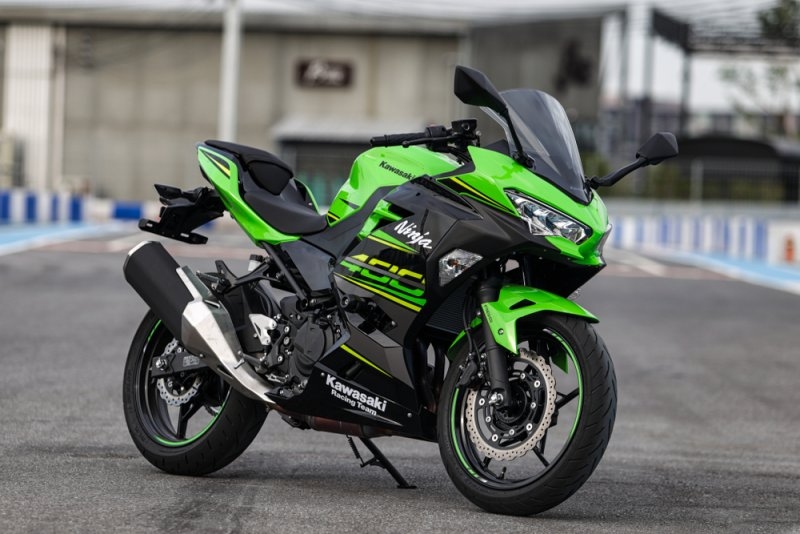
Whether you're replacing a sports bike or shopping for one for the first time, picking the right sport motorcycle is a matter of performance, comfort, running expenses, and daily practicality. But where does this Kawasaki Ninja 500 fall in the sports world?
In this Kawasaki Ninja 500 review, we explore what the bike does well and not so well in terms of engine response, gas mileage, on-road comfort, ownership costs, and more.
The Kawasaki Ninja 500 is based on the already popular Ninja 400 formula. It has a bigger engine, refinished bodywork, and the same attractive full fairing that lends it an aggressive look. Despite the slightly heavier weight and features, this motorcycle remains very easy to handle and is designed for normal everyday riding, not just track use, but it's a compromise of city, highway, and weekend riding.
The Kawasaki Ninja 500 is a motorcycle that can be fun without being scary. The bike delivers power smoothly and steers well, and the riding position is sporty but not as slammed as a real supersport machine. That combination appeals to riders looking to enjoy sportbike styling in a more everyday package.
The power for this engine comes from a 451cc, four-stroke, liquid-cooled, parallel-twin engine paired to a six-speed transmission. As far as the output from the engine, Kawasaki claims 51 horsepower at 10,000 rpm and 31.7 lb-ft of torque at 7,500 rpm. The clutch on the engine is an assist and slipper clutch, and Kawasaki says that it is lighter at the lever while being good for downshifting.
All of the above Kawasaki Ninja 500 specs help these bikes feel quick and enable them to provide relatively smooth power to tackle the roads of everyday use. The engines can feel tame at lower speeds but have enough grunt for that feeling of instant and confident overtaking, assuming the rider shifts gear.
Explore This Topic: Aprilia RS 660 Review That Makes Every Ride Exciting
So, how much does the Kawasaki Ninja 500 cost in the USA? The Kawasaki Ninja 500 costs a bit, depending on the base model year, trim, available ABS equipment, dealer markup, etc. The base MSRP for the 2026 Ninja 500 is $5,399 for the non-ABS model and $5,799 for the ABS edition, according to Kawasaki. Destination charges, taxes, registration, and additional accessories push the final sale price higher.
The standard is a no-frills version where you just pay for the experience itself. SE ABS gains include other convenience and styling items such as a colour TFT display. When considering the value of a bike, always compare the out-the-door price vs. merely the MSRP quoted by the manufacturer.
In practical terms, the performance of the Kawasaki Ninja 500 is most remarkable in street traffic and twisting roads. Handling is very agile, so changing lanes and taking sharp corners is made easier, with the bike's engine providing sufficient power to accelerate normally. It also seems less complex than similar larger, more powerful sport bikes to manoeuvre through slower traffic.
The manufacturer does not provide top speed data, but the Kawasaki Ninja 500 top speed varies depending on rider weight, wind resistance, other conditions, and the test. It should be noted that this is an unofficial figure, so it should not be relied upon as exact. Most Ninja 500 owners value their bike for smooth acceleration, good handling, and midrange power.
If you're wondering, "What is the real-world fuel economy of the Kawasaki Ninja 500?" Kawasaki Ninja 500 fuel consumption is affected by riding style, traffic, speed, and maintenance. The Ninja's parallel-twin engine is quite economical on the highway, but running at top speed will of course increase the motorcycle's fuel consumption. The Ninja's fuel tank has a capacity of about 3.7 gallons, so it can get a range of nearly 200 miles (322 km) before needing to refuel. Read owner reports for your riding situation, not some arbitrary mileage figure.
The Kawasaki Ninja 500 seat height is 30.9 inches. It is a comfortable seat height for most riders, though height is not nearly as important as inseam length and rider confidence controlling a motorcycle. The riding position strikes a good middle ground between sporty feel and all-day comfort. Taller riders should test the legroom, and shorter riders should figure out if they can reach the ground.
When you know how you are going to use it, the Kawasaki Ninja 500 pros & cons are easy to see. It's a reasonably priced combination of power, nimbleness, and user-friendly, beginner-friendly ergonomics, but it is still a small sportbike with compromises. Let's see "what are the pros and cons of the Kawasaki Ninja 500 below".
These benefits make the Ninja 500 much more versatile, but it’s worth trying one out before you buy. It's important to have a comfortable riding position and know how to operate the controls, rather than just look at the specs or styling.
Also Read: Market Trends and Electric Motorcycles Review in 2026
Kawasaki Ninja 500 cannot be accurately determined from a brief ride around a test route due to the fact that this was the 451cc version that replaced the original Ninja 400. The engines are a fairly simple parallel-twin, and the other mechanical parts are proven designs. All that can be said is that long-term dependability will be affected by regular maintenance and the way that the motorcycle is ridden and maintained.
Regular oil changes, chain lube, tyre wear, and warranty support. Buyers also need to consider warranty coverage, local availability of parts, and who does the service. Such practical ownership concerns can matter as much as the initial purchase price in the long run.
This motorcycle is worth consideration if you want a sportbike that offers a larger size but can be ridden in the city and on the highway with equal comfort. A big, bloated body and a cumbersome feeling while riding make it a motorcycle to be considered if you intend to spend a lot of time on it on your daily commute. It's fun to ride for sure, but not as comfortable as the Kawasaki Ninja 500 review.
The base Ninja 500 does not have switchable riding modes but has simple controls with less optionality. The different markets and models do vary, and all specifications should be checked before any specific electronic feature is assumed to be included.
Use fuel with the grade as recommended in the owner's manual for your model year. Using the proper fuel grade helps the engine operate properly; your owner's manual offers the right and wrong fuel and fuel standards for your area.
It is capable of carrying a passenger if installed and operated within the prescribed load limits. The rear seat is a bit small for long-distance travelling. Take a test ride as a passenger before buying the bike.
ABS is available on certain versions – always check the trim before buying. Kawasaki also offers an ABS version, and this information is always stated in the brochure. ABS can also prevent the wheel from locking when braking hard.
Look at the service history, the tyres, the brake pads, the chain, the sprockets, and the paintwork indicating crash damage. Ask if there are any recalls still open, and make sure the documents the seller has correspond to the motorcycle. An experienced mechanic can give you a heads-up before you buy.
This content was created by AI